AI for Humanity: A Guardian’s Vision
Updated: Aug 4, 2025
Published in Towards AI
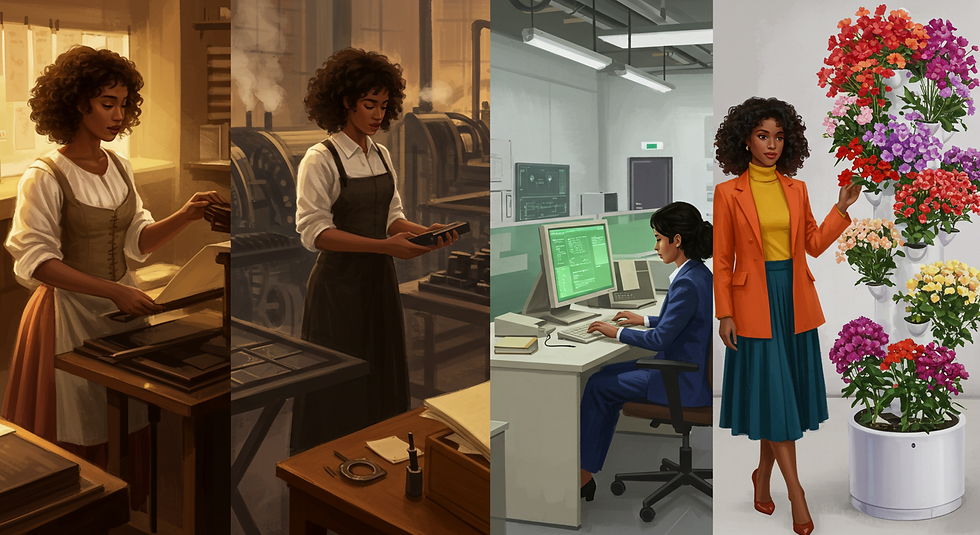
A creator is responsible for their creation. We created AI. Will we shape it, or will we allow it to shape us?
The Age of AI: A Defining Moment for Humanity
Artificial Intelligence (AI) marks the latest chapter in humanity’s history of transformative inventions. From the printing press to the Industrial Revolution to the dawn of computing, we have faced the same fundamental choice: to be active guardians or passive witnesses of our technological future. Now we stand at a unique crossroads, as AI, unlike past technologies, raises profound questions about what it means to be human.
Intelligence was once considered a uniquely human trait. It set us apart from the rest of the animal kingdom: our ability to learn, reason, and create. Now, we have developed a technology inspired by our minds, one that mirrors these uniquely human capabilities.
This similarity brings both promise and peril. AI is more than a tool; it is a mirror that magnifies our greatest aspirations and deepest flaws, our values and prejudices. This mirror urges us to examine our identity as individuals and as a society, and the role we play in AI’s development. Every decision in AI design shapes both the technology and our relationship with it. From healthcare to education to daily communication, AI is reshaping how we work, learn, and connect.
A Call to Action
AI must be designed with humanity at its core, with dignity as its foundation, and with responsibility as its guiding principle. This is more than a vision; it is a call to action. We need guardianship of AI and the wisdom to distinguish between what we can do and what we should do. Only then can AI amplify human dignity rather than diminish it.
Whether we’re policymakers, researchers, AI builders, or citizens, each of us shares this responsibility. Our collective duty is to use AI wisely and with purpose. Simply put, we must be guardians of AI.
AI in the Footsteps of Past Revolutions
As the saying goes, “history repeats itself.” The fears and challenges surrounding AI echo those of past technological revolutions, reminding us that we have been here before.
The Printing Press
When Johannes Gutenberg invented the printing press in the 15th century, it increased access to books and newspapers, but also spread propaganda and misinformation. Similarly, AI, particularly generative AI tools that create realistic text and images, presents both opportunities and challenges. While it can enhance creativity, it also makes it easier to spread false information.
The Industrial Revolution
The Industrial Revolution of the 18th and 19th centuries automated labor, creating industries while displacing traditional workers. This disruption brought challenges but also created new opportunities. AI mirrors this by automating work, raising job concerns, yet creating roles in AI development, oversight, and collaboration across industries.
The Dot-Com Era
The dot-com era of the 1990s and early 2000s marked the rise of the digital age, changing how we communicate, shop, and work. Despite concerns over privacy and security, the internet reshaped how we connect, trade, and innovate. AI is the next phase of this digital transformation — streamlining work, reshaping industries, and changing how we interact with technology.
Each technological shift brought uncertainty but ultimately improved our lives. The challenge, and opportunity, is to guarantee AI follows this pattern.
Learning from History, Looking to the Future
Despite technological challenges, humanity has thrived by expanding knowledge, opportunity, and prosperity. Our choices now will determine AI’s impact. Will it personalize learning for every student? Will it accelerate scientific discovery? Or will it deepen existing inequalities and amplify misinformation?
History shows that new technologies bring uncertainty, and their impact depends on how we use them. We cannot be paralyzed by fear or carried away by unchecked enthusiasm. Our responsibility as guardians is to ensure AI serves humanity’s best interests, just as the printing press spread knowledge, the Industrial Revolution improved living standards, and the internet connected humanity.
A Guardian’s Creed
AI reflects its creators, learning both our intelligence and our flaws. If we teach it bias, it will magnify it. We must protect it from becoming a tool of division or exploitation.AI should amplify human dignity and creativity, not just efficiency. As guardians, we must align on a shared purpose and take decisive action.
Our Commitments to Responsible AI Stewardship
We commit to ensuring AI serves humanity’s highest potential:
Design with Purpose
AI must serve real human needs, enhancing capabilities rather than replacing people by:
Serving human needs before profits
Amplifying human capability, not replacing it
Inspiring innovation, not just automating
Protect Human Dignity
AI must respect human dignity by:
Preventing bias in hiring, lending, and healthcare
Empowering underrepresented groups through equitable access
Rejecting exploitative automation that replaces jobs without offering new opportunities
Foster Innovation Responsibly
We must create environments where:
AI learns and evolves safely
Clear boundaries guide ethical progress
Transparency and accountability guide development
Ensure Accessibility
We must make AI’s benefits available to all by:
Breaking down barriers to access
Supporting diverse cultures and abilities
Ensuring equal benefits across all communities
These commitments require more than words; they demand action.
Taking Action
Every stakeholder has a role in responsible AI stewardship:
Individual Actions:
Support AI ethics and governance organizations
Demand accountability from tech companies
Demand transparency from companies using AI
Discuss AI ethics with children
Support research into AI’s societal impact
Professional Roles:
Policymakers must create frameworks that protect rights while fostering innovation
AI Builders must embed ethical principles into every system they build
Businesses must prioritize responsible AI deployment over short-term gains
Citizens must stay informed and demand accountability
The time for action is now. Each decision we make shapes not just AI’s development, but our collective future.
The Path Forward: Our Role as AI’s Guardians
AI is not some alien force; it is born from human creativity and our quest for deeper understanding. Unlike past inventions, AI learns, adapts, and makes decisions on its own, often in ways we don’t fully understand, raising new ethical and societal challenges. Now that AI is a reality, we must be intentional guardians.
We must nurture it.
We must protect it.
We must celebrate it.
We must control it.
This responsibility belongs to all of humanity.
Will we shape AI for good, or let it shape us?
AI will become what we allow it to become. Mismanagement will entrench biases, invade privacy, and accelerate misinformation. Responsible oversight, on the other hand, will empower creativity, enhance decision-making, and foster equity. This isn’t about limiting progress; it’s about guiding it toward a better future. We have a duty to ensure AI reflects humanity’s best qualities.
We are the guardians of AI’s future. Let us build a future worthy of our humanity.
Join the Conversation
"AI is the tool, but the vision is human." — Sophia B.
👉 For weekly insights on navigating our AI-driven world, subscribe to AI & Me:
Let’s Connect
I’m exploring how generative AI is reshaping storytelling, science, and art — especially for those of us outside traditional creative industries.
About the Author
Sophia Banton works at the intersection of AI strategy, communication, and human impact. With a background in bioinformatics, public health, and data science, she brings a grounded, cross-disciplinary perspective to the adoption of emerging technologies.
Beyond technical applications, she explores GenAI’s creative potential through storytelling and short-form video, using experimentation to understand how generative models are reshaping narrative, communication, and visual expression.


